
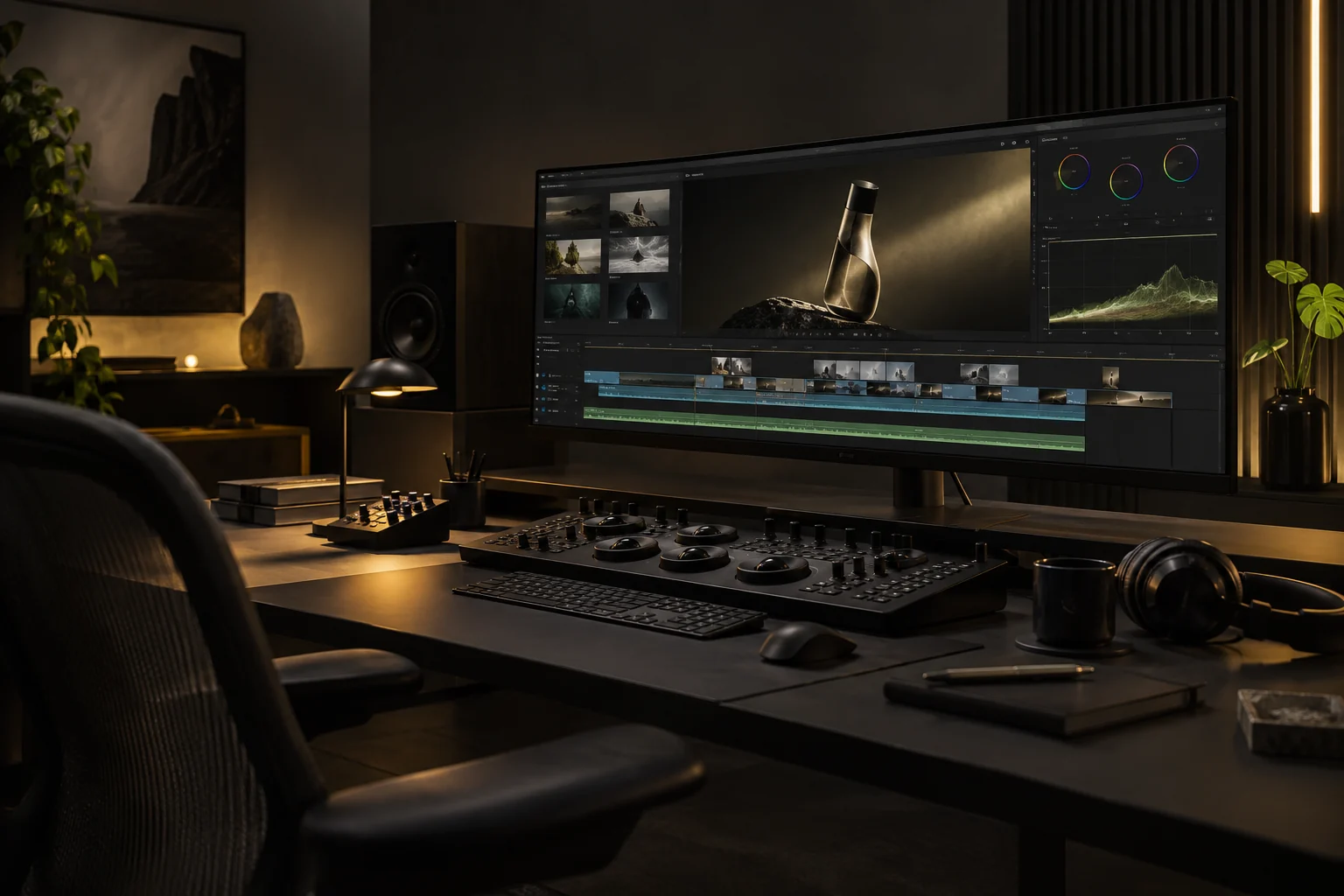
Editing starts before the edit
A useful brand video begins with a clear purpose: what should the viewer learn, feel or do? That decision affects the footage to capture, the questions to ask on set and the versions to deliver. A folder of attractive shots cannot always rescue an unclear brief.
Log footage by scene, product, speaker, language and usage rights. Identify missing shots early. For a campaign, agree the placements and aspect ratios before choosing a master frame; otherwise important action or text may disappear in a vertical crop.
Shape a story the viewer can follow
A first cut should establish context, make one point at a time and end with an appropriate next action. Pacing depends on the message and placement. A complex service explanation may need more time than a social introduction; cutting faster does not automatically make either clearer.
- Select evidence that supports the claim, such as a real product detail, process or customer voice.
- Remove repeated ideas and shots that delay the central message.
- Test the opening frame and on-screen text at mobile size.
- Review the sequence with people who did not attend the shoot.
Finish picture and sound consistently
Colour correction aligns exposure and colour across shots. Grading establishes a deliberate visual mood after the technical match. Clear dialogue, controlled music levels and suitable sound effects make the work easier to understand. Visual effects should explain or enhance a real element, never imply a product capability that does not exist.
Check speech intelligibility on a phone, captions against the final audio, safe areas and the end card. Export a clean version without embedded text when future localisation is likely. Our creative studio service can plan these requirements with the shoot.
Deliver reusable assets, not one isolated file
A master film can become social introductions, paid media variations, a website cut and a sales presentation when the edit and rights allow it. Give each version a clear name, ratio, language, caption status and intended destination. Keep approved project files and source media organised so the next campaign can reuse them.
Use the video format matrix to choose versions before final approval. W3C’s transcript guidance helps specify text alternatives when the film carries information that should be available in another format.
Review against the brief
Assess whether viewers reach the intended next step, rather than assuming lower costs or higher conversions from better editing alone. Where a campaign is measurable, compare like-for-like versions, audience and time periods. Record what the next shoot should capture differently.
If you have footage ready or are planning a production, share the brief with WIDECREATION. We can define the edit, finishing and delivery package before work begins.