
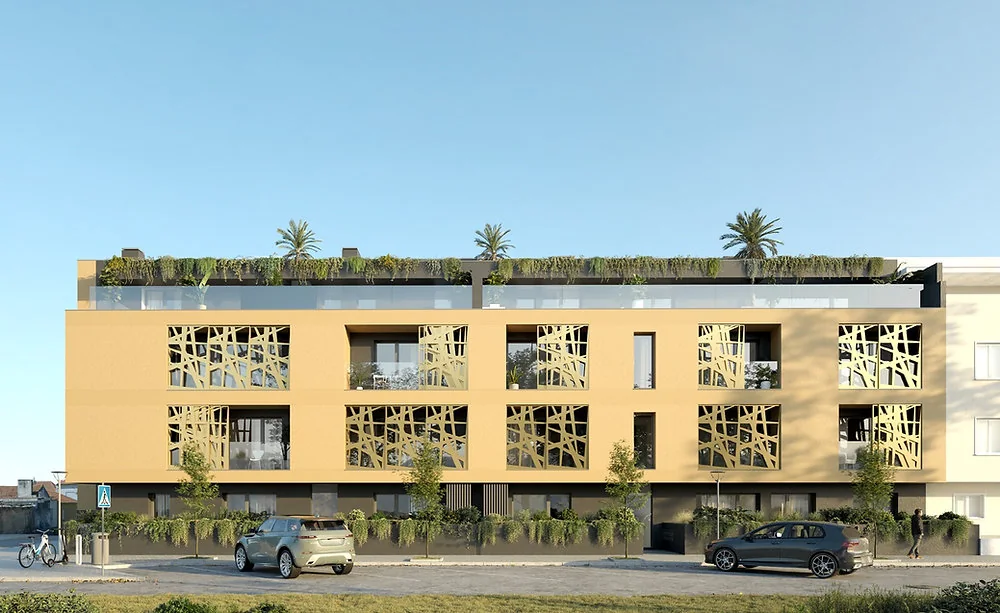
Growth companies don’t compete at the base of the mountain. They aim for the summit, the sweet spot where brand authority, premium positioning and consistent sales converge.
The question is not whether they need marketing. It’s whether their marketing is powerful enough to elevate perception before the competition does.
High-end 3D architectural visualization has become one of the most strategic tools for companies that want to climb, and stay, at the top.
This is not about “beautiful renders.” It’s about market leverage.
Perception Creates Positioning
In Real Estate and architecture-driven industries, perception often determines value before the product is fully realized. A company that presents its projects through high-end 3D imagery signals precision, ambition, and premium intent.
When prospects see cinematic lighting, refined materials, and emotionally engaging environments, they don’t just evaluate a property, they evaluate the brand behind it.
High-end visualization positions a company as:
- Forward-thinking
- Detail-oriented
- Investment-worthy
- Internationally competitive
And in competitive markets, perception becomes pricing power.
The Benefits: More Than Aesthetic Appeal
High-end 3D allows companies to sell before construction is completed — sometimes before it even begins. Buyers understand faster. Investors commit earlier. Decision-making friction decreases.
Clarity accelerates trust.
Trust accelerates sales.
When a growth company consistently communicates through premium visual content, it differentiates itself from competitors using generic visuals or basic marketing assets.
Premium visuals attract premium clients.
And premium clients are not just higher-paying, they are often more loyal and more aligned with long-term growth.
Emotion drives purchasing decisions. High-end archviz transforms technical specifications into immersive experiences. It allows clients to imagine themselves inside the space, living, working or investing.
That emotional pre-experience increases:
- Engagement
- Conversion rates
- Confidence in high-value transactions
One overlooked advantage of high-end 3D visualization is expectation management. When visuals accurately communicate atmosphere, quality, and spatial intention, there are fewer surprises post-delivery.
Satisfied clients return. Returning clients compound growth.
The Cons: Strategic Investment, Not Instant Magic
High-end archviz is not without its challenges. It requires upfront investment. It demands collaboration and strategic alignment. It must be executed at true high-end quality, not average production disguised as premium.
Poor execution can dilute brand perception instead of elevating it. This is not a shortcut. It’s a calculated move. Companies that treat 3D visualization as decoration will see limited returns. Those that integrate it into branding, marketing strategy, and sales positioning unlock real leverage.
Market Positioning: Reaching the Sweet Spot
Smart Real State companies that embrace high-end 3D archviz gain something powerful: visual dominance.
They control the narrative before competitors enter the conversation. They launch with impact. They present with authority. They create desire before the market even reacts.
Over time, this creates:
- Premium brand perception
- Higher perceived project value
- International credibility
- Stronger investor confidence
- Competitive insulation
At the top of the mountain, margins are better. Clients are more aligned. Competition is thinner.
And perception is everything.
A Growth Multiplier, Not Just a Marketing Tool
High-end 3D architectural visualization is not simply a promotional asset. It’s a growth accelerator. A positioning strategy. A trust-building mechanism.
For companies serious about scalin, about climbing, it offers something invaluable: the ability to show the future before it exists and to do so with authority.
In markets where attention is short and competition is relentless, those who communicate with clarity, emotion and visual excellence don’t just participate.
If you are preparing a property launch, share the project brief. We can define which views answer buyer and investor questions.
Scope the visualisation before production
Identify the decision each image must support: planning approval, investor confidence, pre-sales or a launch campaign. Agree on the architectural source files, level of design certainty, viewpoints, materials and number of revision rounds. Request a clear distinction between confirmed specifications and illustrative details so prospective buyers are not misled. Test the visuals in the formats they will actually appear in, from brochure spreads to mobile ads. Measure their contribution through viewing behaviour and qualified enquiries, not by render quality alone.
Choose the 3D modelling approach around the available architectural files and revision risk. If still images cannot answer the buyer’s questions about space or circulation, assess where immersive real-estate 3D adds value before extending the production scope.
For a Blender production pipeline, the library overrides documentation explains how linked assets can be adapted while retaining a connection to the source. Agree how such updates enter the project’s review process.