
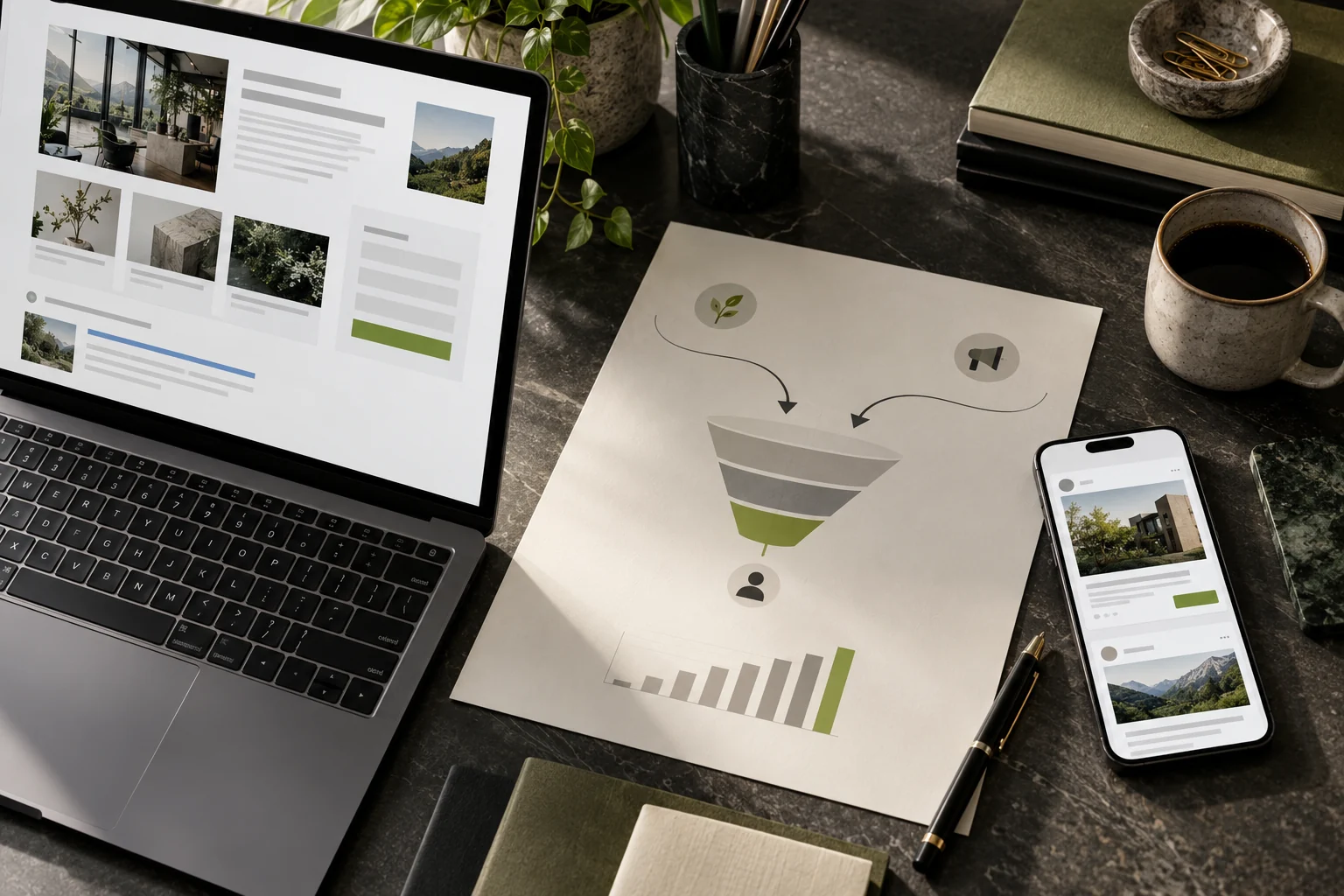
Inbound and outbound marketing are often treated as opposites.In reality, the most effective brands use both, strategically and intentionally.
Inbound marketing focuses on attraction. Outbound marketing focuses on activation. When aligned, they create a powerful growth engine that supports awareness, acquisition, and conversion across the entire customer journey.
Understanding inbound marketing
Inbound marketing is about earning attention rather than buying it.
It relies on valuable, relevant content that attracts users organically through channels such as:
- SEO and content marketing
- Social media and community building
- Educational resources, guides, and thought leadership
- Email nurturing and lead qualification
Inbound works best when the objective is long-term brand authority, trust, and cost-efficient lead generation.
It supports buyers who are already searching, researching, or comparing options.
However, inbound requires time, consistency and patience.
Understanding outbound marketing
Outbound marketing is proactive.It places your message directly in front of the right audience.
Typical outbound channels include:
- Paid media campaigns (Google Ads, Meta Ads, LinkedIn, YouTube)
- Display and programmatic advertising
- Influencer collaborations
- Cold outreach and paid partnerships
Outbound is ideal for accelerating results, launching new products, entering new markets, or scaling quickly. It provides speed, control, and predictable volume, when executed with precision.
Why the balance matters
Inbound alone can be slow. Outbound alone can be expensive. Together, they reinforce each other:
- Outbound amplifies inbound content
- Inbound increases outbound efficiency and conversion rates
- Data from outbound campaigns informs inbound strategy
- Both support different moments of the consumer journey
The most successful strategies are not channel-led, they are objective-led.
Final Considerations
Growth happens when attraction and activation work together.
At WIDECREATION, we design inbound and outbound strategies as one ecosystem, aligned with business goals, data, and real user behavior.
To decide where inbound and outreach each belong, tell us about your buyers and sales cycle.
Balance the channels against sales capacity
Use inbound content to answer recurring questions and capture existing demand; use outbound outreach to reach a defined list of accounts that may not be searching yet. Align both around the same ideal customer profile and value proposition. Set a response owner and qualification rule before increasing lead volume. Compare qualified conversations, opportunity rate and sales cycle by source, while recognising that people may encounter more than one touchpoint. Review the mix every quarter as the team, market and budget change.
Use the customer journey map to identify which questions content can answer and which need a direct conversation. Before increasing either channel’s lead volume, agree the marketing-to-sales handoff so the team can respond and qualify enquiries consistently.
The GA4 traffic acquisition report documentation explains how traffic sources are represented. Use that evidence alongside CRM qualification and sales outcomes when comparing inbound and outbound activity.